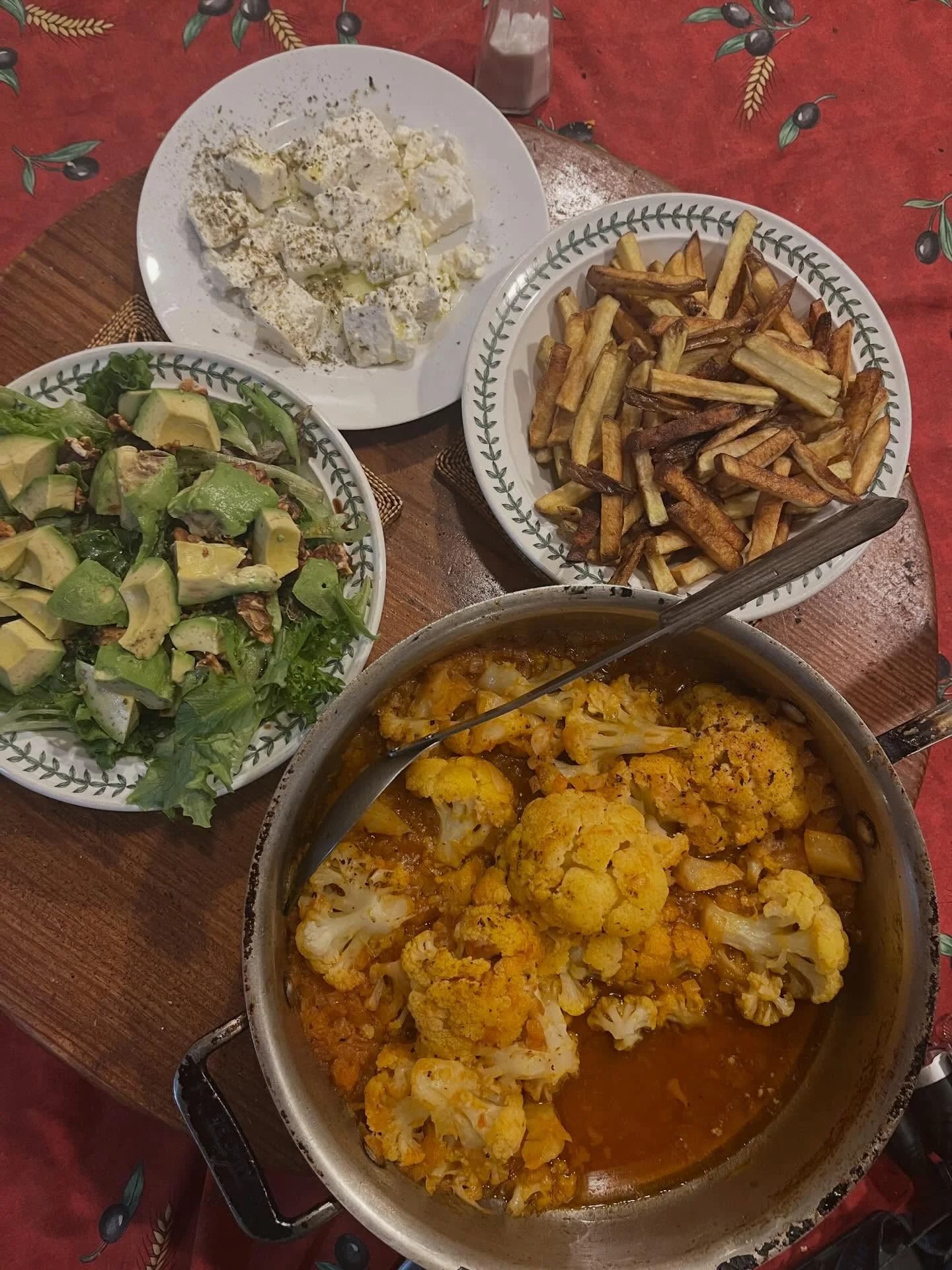
Cauliflower with Tomatoes (Kounoupidi Kapama)
EverydayCauliflower gently braised with tomatoes, onions, and olive oil, a simple Greek ladera dish that turns deeply savory and satisfying.
Cauliflower with Tomatoes (Kounoupidi Kapama)
Cauliflower gently braised with tomatoes, onions, and olive oil, a simple Greek ladera dish that turns deeply savory and satisfying.
1Ingredients
- 1 head cauliflower, cut into florets
- Use the stems too - trim the tough outer layer and cut the tender inner part into pieces
- 1 small red onion, chopped
- 3-4 tablespoons EVGE extra virgin olive oil
- Salt and freshly ground black pepper
- 1 tablespoon tomato paste
- Water, as needed
2Instructions
Cauliflower with tomatoes, known in Greece as kounoupidi kapama, is another classic ladera dish.
Like many vegetables in the Greek kitchen, cauliflower transforms when cooked slowly in olive oil and tomato. The florets absorb the sauce and become tender, flavorful, and deeply satisfying.
This was another vegetable Carol had never eaten until she tasted it at the table of Yiayia Kikitsa, who often served it with hand-cut potatoes fried in olive oil and a chunk of feta.
Best of all, this dish is incredibly simple and can be ready in about 30 minutes.
Prepare the Flavor Base
-
Generously coat the bottom of a wide pan with olive oil.
-
Add the chopped onion with a pinch of salt and saute for several minutes until the onion softens.
Add Tomato Paste
- Add the tomato paste and saute briefly, about 1 minute, to deepen the flavor.
Add the Cauliflower
-
Add the cauliflower florets and stems to the pan.
-
Season lightly with salt and stir gently so the cauliflower is coated with the olive oil and onion.
Simmer
-
Add water until it reaches about halfway up the cauliflower. The vegetables should not be fully submerged.
-
Cover the pan and cook for about 15 minutes.
-
Turn the cauliflower pieces, cover again, and cook another 10 minutes, until tender.
-
Remove the lid and allow the sauce to reduce slightly until it thickens.
Tips
The inner cauliflower stems are tender and flavorful. Trim away only the thick outer layer and use the inside portion so nothing goes to waste.
Serving the Traditional Way
Yiayia Kikitsa often served this dish with hand-cut potatoes fried in olive oil and a chunk of feta on the side.
You can also add mini or cubed potatoes directly to the pan along with the cauliflower. As they cook, they absorb the tomato and olive oil and make the dish even more satisfying.
Variation: Cauliflower with Pasta
This simple cauliflower dish also makes a wonderful pasta sauce.
-
Prepare the cauliflower as described above, but cook it in a deeper pot.
-
When sauteing the onions, add 3 crushed garlic cloves.
-
Once the cauliflower is tender, add 4 fresh tomatoes, pureed, or one 14-oz can of crushed tomatoes, and bring to a gentle simmer.
-
Meanwhile, boil pasta in just enough salted water to cover it, cooking it for about half of the recommended time.
-
Reserve about 1 cup of pasta water, then add the partially cooked pasta directly into the cauliflower sauce with a little of the reserved water.
-
Let the pasta finish cooking in the sauce so it absorbs the tomato, olive oil, and cauliflower flavor.
-
Turn off the heat and let the pot sit for about 10 minutes.
-
Drizzle with a little more olive oil before serving. Parmesan can be added if desired.
Chef's Tip
Finishing pasta directly in the sauce is a classic Greek cooking technique. As the pasta finishes cooking, it releases starch that thickens the sauce and helps it cling to every bite.
This is the same basic idea behind dishes like yiouvetsi, where pasta finishes cooking directly in the sauce instead of separately.
Why Cauliflower Works So Well
When cauliflower cooks slowly with olive oil and tomato, it absorbs the sauce while maintaining its texture.
This simple method is typical of Greek vegetable cooking, where generous olive oil, tomatoes, and patient simmering turn humble ingredients into the centerpiece of the meal.
3Tips & Notes
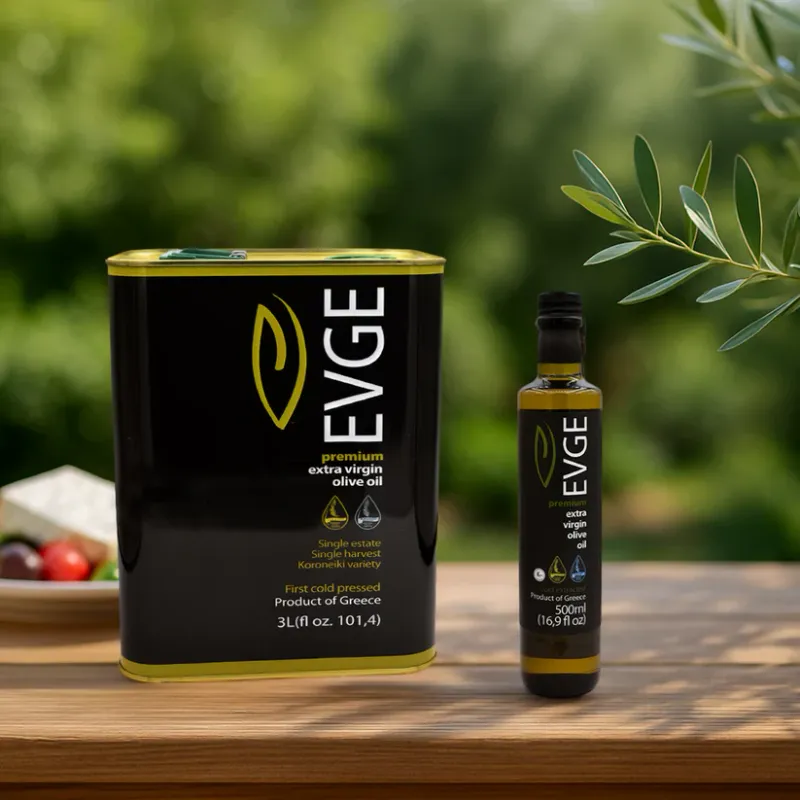
A Note on Olive Oil
For authentic results, use a high-quality extra virgin olive oil — and don't be shy with it. Greeks pour, not drizzle.
Shop EVGE Olive OilGet More Greek Recipes
Join thousands of home cooks getting authentic Greek recipes delivered weekly.
No spam, ever. Unsubscribe anytime.