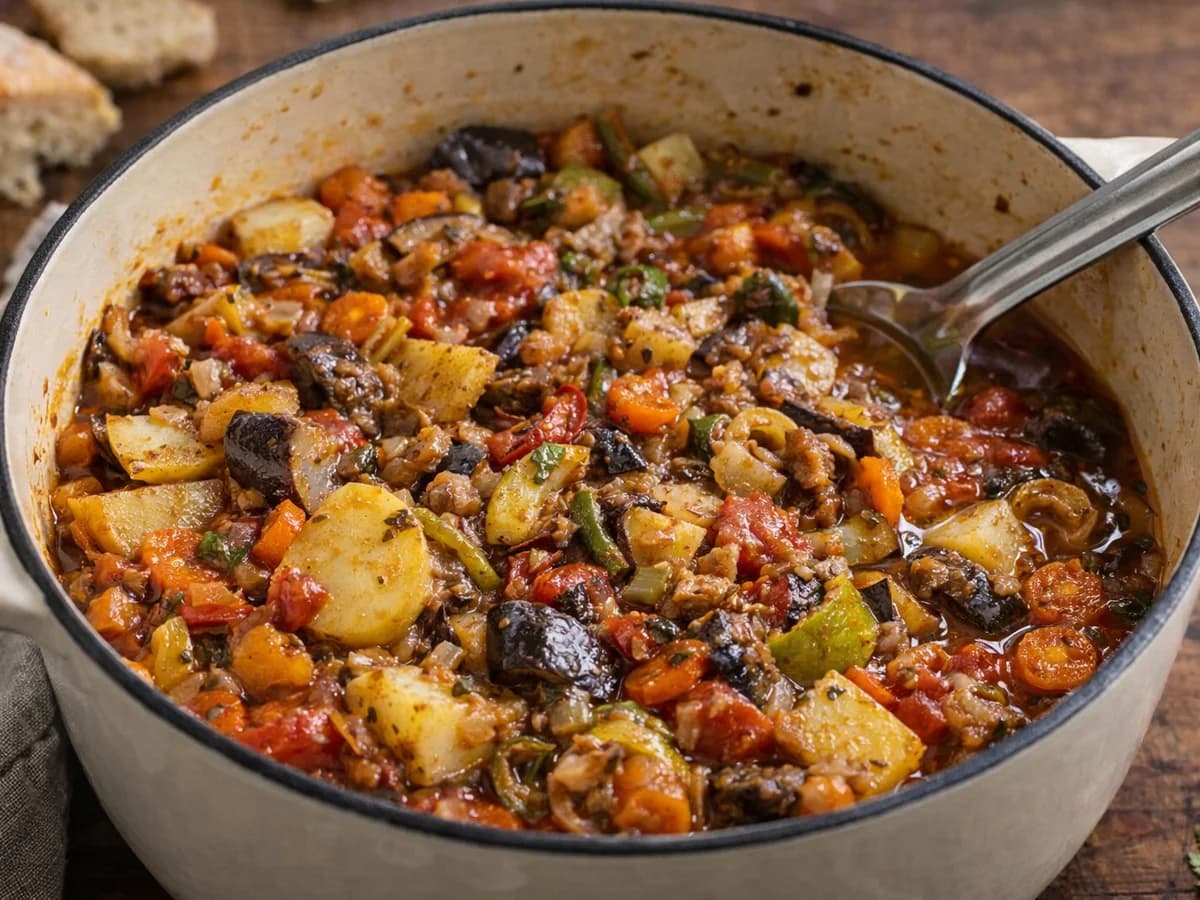
Soufiko (Greek Ratatouille - Stovetop)
EverydayA summery medley of eggplant, zucchini, potatoes, and peppers braised in tomato and olive oil. Greek comfort food at its simplest.
Soufiko (Greek Ratatouille - Stovetop)
A summery medley of eggplant, zucchini, potatoes, and peppers braised in tomato and olive oil. Greek comfort food at its simplest.
1Ingredients
- 1 onion, chopped
- 1 small green, red, orange, or yellow bell pepper, cut into squares
- 1 garlic clove, crushed
- 1 small eggplant, cubed
- 1 large zucchini, cubed
- 2 medium potatoes, cubed
- 1 tomato, chopped (or 1 tbsp tomato paste diluted in 1/4 cup water)
- 1 tbsp fresh basil or mint and/or parsley
- 1 tbsp dried oregano
- 1/2 cup EVGE extra virgin olive oil
- 1 tsp salt
- Freshly ground pepper
2Instructions
Soufiko is the Greek version of ratatouille — a summer vegetable stew made with whatever is ripe in the garden. This stovetop version is quicker than the oven-baked briam, but equally delicious.
The key is cutting everything to roughly the same size (1-2 inch cubes) so it cooks evenly.
The Method
-
Heat 1 tablespoon olive oil in a large pan over medium heat.
-
Add the onions and cook for about 7 minutes, until soft.
-
Add another tablespoon of oil and the eggplant. Season with salt. Cook for 8-10 minutes, until the eggplant softens.
-
Add the potato and bell pepper. Sauté for a few minutes.
-
Add the zucchini, tomato (or diluted tomato paste), and oregano. Grind some black pepper over everything.
-
Cover and cook on low heat for 20-25 minutes, until all vegetables are soft.
-
Stir in the fresh basil (or mint/parsley). Taste for salt.
The Olive Oil Question
Half a cup of olive oil for 2-4 servings might seem like a lot if you're not used to Greek cooking. It's not a mistake.
Ladera dishes — vegetables cooked in oil — are meant to be rich with olive oil. The oil carries the flavors, makes the vegetables silky, and is part of what you're eating, not just a cooking medium.
Use single source, low acidity olive oil like EVGE. You'll taste it.
Serving
Serve warm or at room temperature with:
- Crusty bread
- Feta cheese
- A drizzle of fresh olive oil
This makes a perfect light summer meal on its own, or a side dish for grilled meat.
Soufiko vs. Briam vs. Tourlou
Greek vegetable stews have different names depending on the region and preparation:
- Soufiko: Originally from Ikaria, made on the stovetop on one side of the island and layered casserole style on the other side
- Briam: Made in the oven, vegetables usually sliced rather than cubed, no eggplant
- Tourlou: Just like Briam but includes eggplant
The ingredients are similar — it's mostly about how you cook them.
Make-Ahead
Like all ladera dishes, soufiko is better the next day. Make it ahead, let the flavors meld, and serve at room temperature. It keeps refrigerated for 4-5 days.
Variations
More vegetables: Add green beans, okra, or whatever summer vegetables you have.
More herbs: Fresh mint is wonderful in this, especially in summer.
With cheese: Some cooks add crumbled feta in the last few minutes of cooking.
Pasta version: Carol calls this vegetarian yiouvetsi.
- This is usually made with orzo or egg noodles, but you can use any pasta you like.
- Do not use potatoes. Add 3 tomatoes, or 1 14-ounce can of tomatoes, or 3 tablespoons of tomato paste to the original recipe.
- If using orzo, add 2 cups of water after the vegetables are cooked. When boiling, add 1 cup of orzo and lower the heat to a simmer. Add more water if needed. Turn off after 8 minutes, cover, and let sit for about 10 minutes.
- If using other pasta, boil 1 cup in just enough salted water to cover it, cooking it for about half of the recommended time.
- Reserve about 1 cup of pasta water, then add the partially cooked pasta directly into the soufiko with the reserved water.
- Let the pasta finish cooking in the sauce.
- Turn off the heat and let the pot sit for about 10 minutes.
- Drizzle with a little more olive oil before serving. Parmesan can be added if desired.
3Tips & Notes
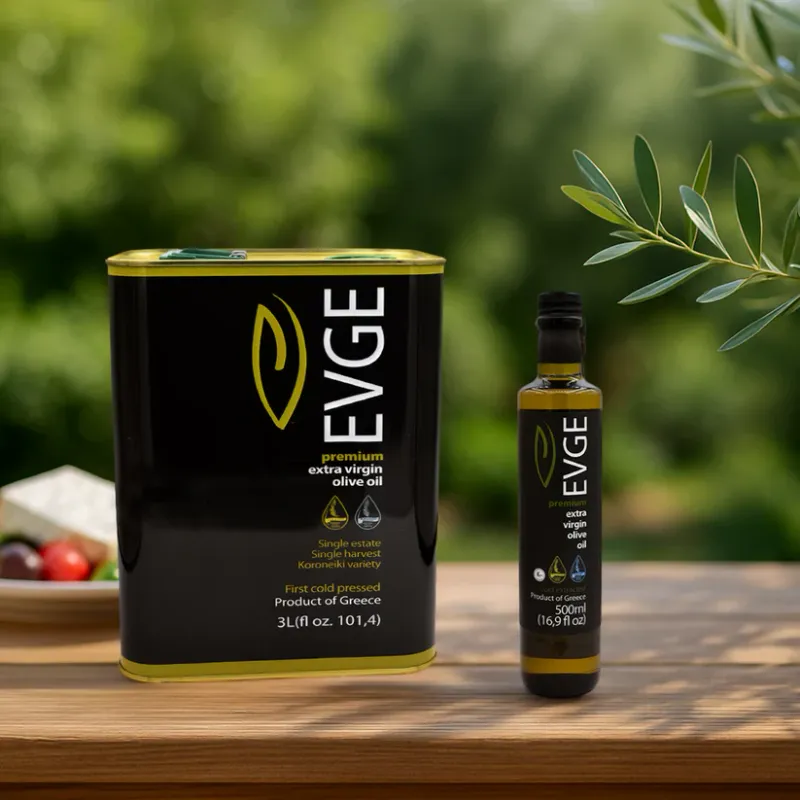
A Note on Olive Oil
For authentic results, use a high-quality extra virgin olive oil — and don't be shy with it. Greeks pour, not drizzle.
Shop EVGE Olive OilGet More Greek Recipes
Join thousands of home cooks getting authentic Greek recipes delivered weekly.
No spam, ever. Unsubscribe anytime.