Greek Legumes: What Greeks Actually Eat Most
Beans, lentils, chickpeas, and fava are not side dishes in Greece. They are one of the central patterns of the Greek way of eating.
April 3, 2026
When people think of the Mediterranean diet, they usually picture olive oil, fish, maybe a glass of wine. What almost no one mentions is beans. And yet, in Greece, legumes, or ospria as they are called, are one of the most common meals you will find on the table.
Not occasionally, but several times a week.
A pot of lentils, a pan of beans baked in tomato sauce, chickpeas with greens, or black-eyed peas simply dressed with olive oil and lemon. These are not side dishes. They are the meal.
The Protein Everyone Is Looking For
There is a lot of focus today on getting enough protein. In Greece, that question was never asked, because it was already built into the way people ate.
Legumes provide protein and fiber, along with minerals and slow, steady energy that keeps you full and satisfied. They do this without heaviness, without excess, and without needing to be measured or tracked. They simply show up on the table, again and again.
In many of the longest-living regions of Greece, legumes are eaten almost daily, not because anyone is trying to follow a health plan, but because this is simply how people eat.
A Forgotten Way of Eating
In many American kitchens, these kinds of meals have been pushed aside. Beans are often seen as something occasional, or just a side.
In Greece, it is the opposite.
Legumes are a main dish two or more times per week, and often appear in other meals as well, as salads, sides, or part of a spread. Fava with olive oil and onions, black-eyed peas dressed with lemon, lentils served simply with bread and olives. This is everyday food, and it is one of the reasons the overall way of eating feels so balanced and sustainable.
The Meals That Carry the Week
In my kitchen, legumes are often the starting point. A pot of lentils becomes dinner, then lunch the next day, then something else entirely by the end of the week. Beans might begin as a simple dish, then be served with greens, added to rice, or turned into a salad.
They do not stay the same. They evolve.
And that is part of what makes this way of eating so practical. A few dishes made at the beginning of the week continue to carry you forward without needing to start over each day.
How Greeks Cook Legumes
The method is simple and repeated again and again. Legumes are usually soaked, the water changed, and then skimmed of foam and simmered slowly with onion, garlic, and herbs, often with tomatoes added for depth. Olive oil is always present, not as a finishing drizzle, but as an integral part of the dish. At the end, something bright, lemon or vinegar, brings everything into balance.
There is no complexity here, no special technique. Just a way of cooking that, once understood, can be applied again and again without thinking.
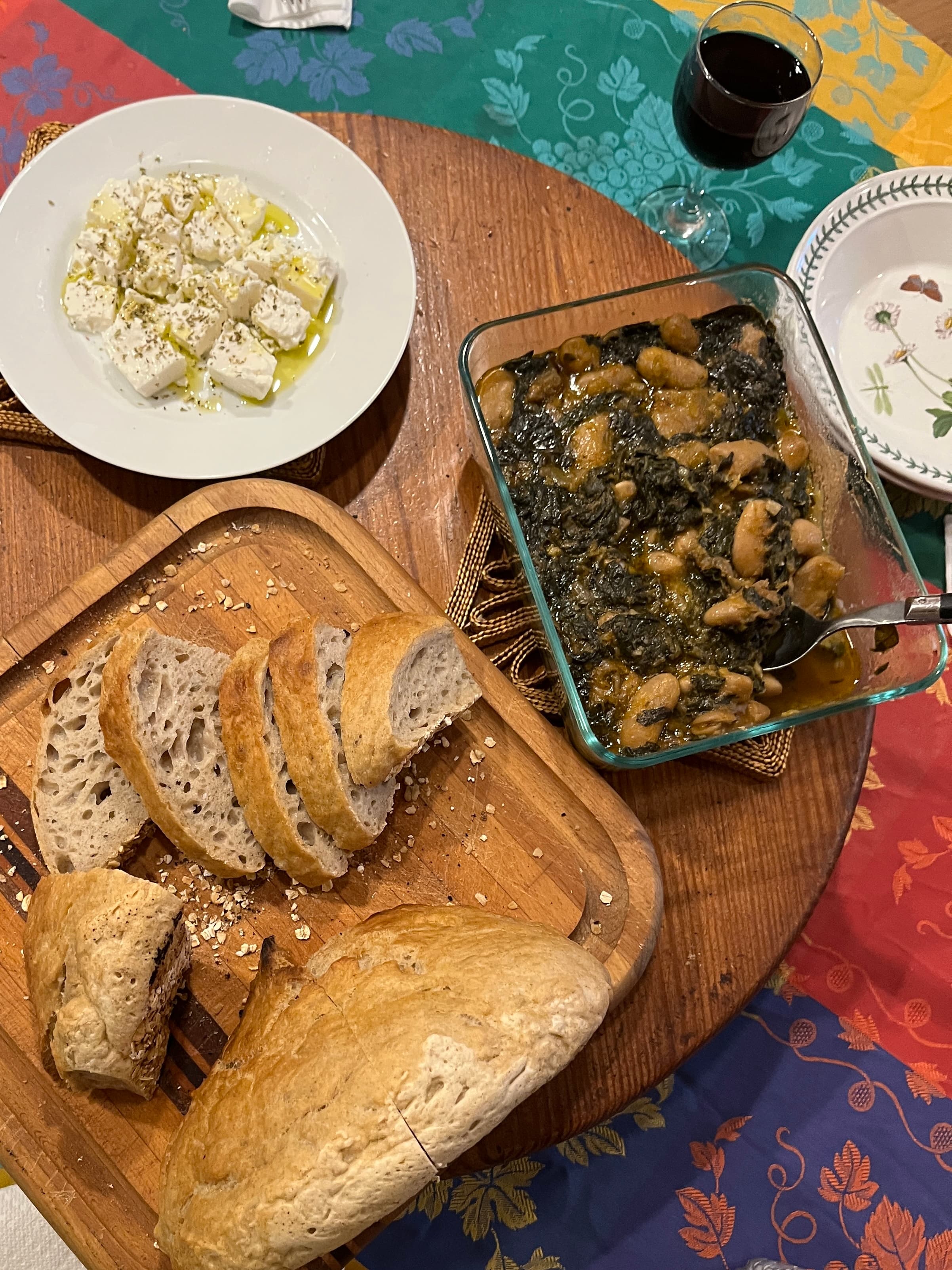
In my own kitchen, I often make a large pot and freeze portions so I always have beans or lentils on hand. I just came back to a very busy week after being out of town, and without cooking, I had lentil soup one day, lentils with rice and yogurt the next, and gigantes with spinach after that, all from the freezer. One day of cooking became several days of meals.
The Greek Protein Perspective
Meat is not the center of the plate. It appears occasionally, sometimes once a week, often less. Most of the time, protein comes from legumes, yogurt, cheese, eggs, nuts, and fish.
Because of that, meals feel lighter, simpler, and easier to repeat day after day. There is no need to force balance. It is already there.
A Rhythm, Not a Recipe
Over time, you stop thinking of these as individual recipes. They become part of a rhythm. You know how to make lentils. You know how to make beans. You know how to adjust based on what you have.
And once that happens, cooking becomes easier, not harder. It becomes instinctive.
Where to Start
If you are building this into your kitchen, start simply.
- Make a pot of lentil soup.
- Try gigantes or gigantes with spinach.
- Cook chickpeas with peppers.
- Keep black-eyed peas salad in the refrigerator for a meal that is ready to go.
Do it once or twice a week, and let it become familiar. That is how this way of eating begins.
Want More Greek Wisdom?
Get weekly insights on Greek food, lifestyle, and travel delivered to your inbox.
No spam, ever. Unsubscribe anytime.