Metron Ariston: Measure as the Foundation of Greek Life
Why the ancient Greek idea that measure is best still explains the rhythm, balance, and sustainability of Greek life today.
March 25, 2026
There is a quiet idea that runs through Greek life from antiquity to today, so ingrained that most Greeks never stop to name it.
The ancient Greeks called it metron ariston (μέτρον ἄριστον) — measure is best.
It was not a slogan or a rule. It was a way of understanding how life works when it is lived well. Too much of anything, even something good, was believed to lead to imbalance. The best life existed somewhere in the middle, where enjoyment and restraint could coexist naturally.
Measure in Daily Life
For the ancient Greeks, balance was not abstract philosophy. It was practical wisdom.
Excess — what they called hubris — was dangerous, whether it appeared as overindulgence, unchecked ambition, or total denial of pleasure. Life was meant to be full, but never frantic. Enjoyable, but never extreme.
That understanding never disappeared. It simply became habit.
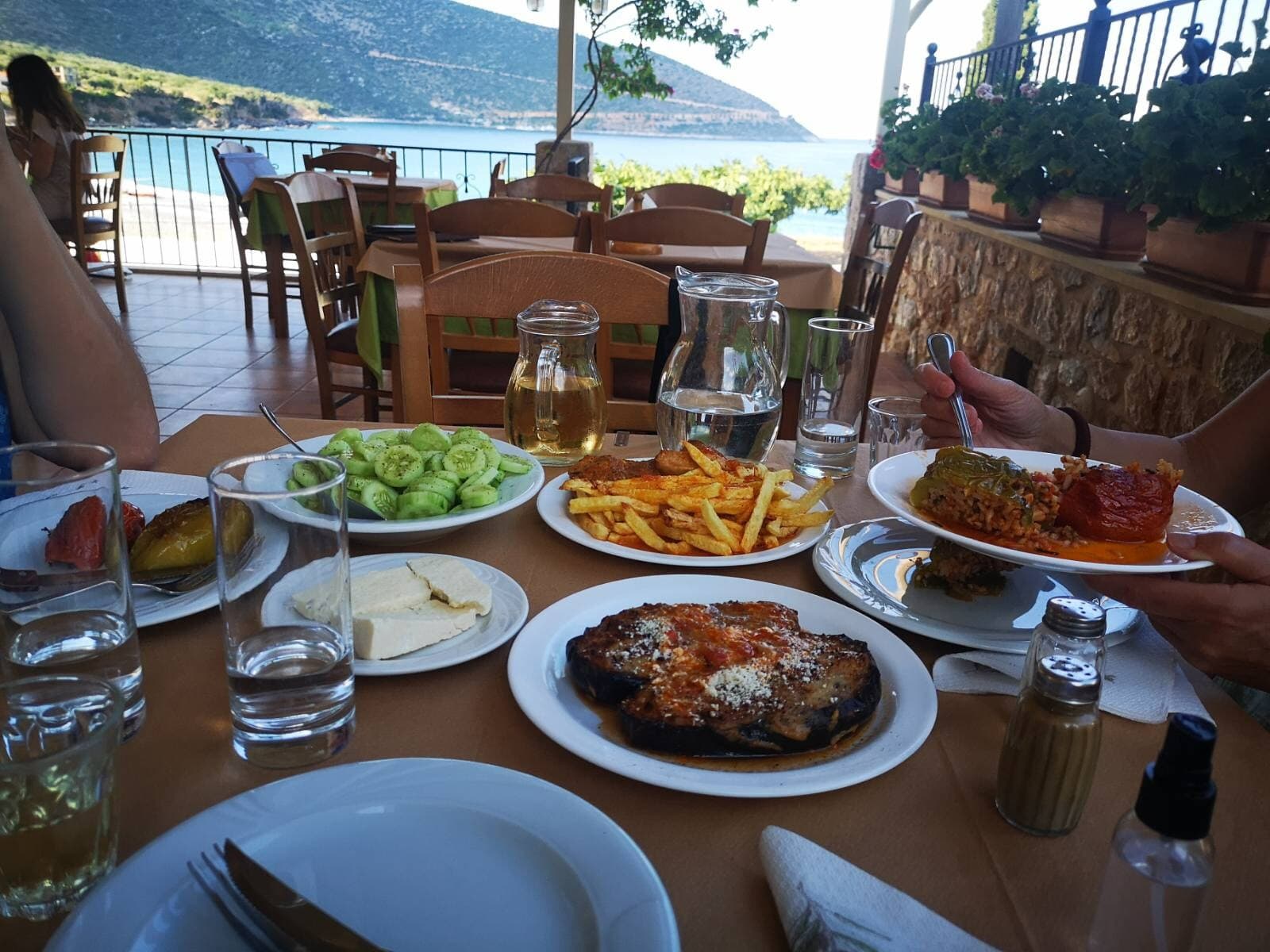
You can still see it in the way Greeks approach food. Meals are generous but not excessive, rich but not heavy, satisfying without being indulgent. Olive oil, bread, vegetables, legumes, seafood, cheese, and wine appear regularly, but rarely in isolation and almost never in extremes.
Food is not optimized or feared. It is shared, lingered over, and enjoyed as part of daily life.
Fasting and Feasting
This sense of measure also explains something often misunderstood from the outside: Greek Orthodox fasting.
These fasting periods, which add up to roughly 200 days a year, are not about punishment or restriction. They are essentially plant-based periods, excluding meat, dairy, and eggs while allowing shellfish, traditionally considered bloodless.
The purpose is not to suffer, but to reset — to bring body and spirit back into balance after periods of richness and celebration.
Fasting and feasting are not opposites. They belong to the same rhythm.
Beyond Food
The same balance appears in how Greeks relate to work and rest. Life is not meant to be a constant sprint. Coffee is something you sit with. Conversations are not rushed. Evenings stretch.
Rest is not something you earn after exhaustion. It is part of staying human.
Over time, this protects something deeper. Relationships remain central. People stay connected. Life does not collapse into productivity alone.
Perhaps that is one reason Greeks often age differently. Older people remain part of daily life — visible, engaged, cooking, walking, arguing, laughing, gathering. Longevity is not only about what is on the plate, but about how life is lived: steadily, socially, and with purpose.
Not Perfection, But Rhythm
Of course this does not mean Greeks live in perfect balance all the time. They love food, they love gathering, and they are just as capable of excess. The difference is not perfection, but awareness.
Measure is understood, even when it is not perfectly followed. And that awareness creates a natural return to balance — not through restriction, but through rhythm.
In a modern world that often swings between extremes, this idea of measure can feel almost radical.
But it is also quietly sustainable.
Not perfection. Not deprivation. Just rhythm.
Want More Greek Wisdom?
Get weekly insights on Greek food, lifestyle, and travel delivered to your inbox.
No spam, ever. Unsubscribe anytime.