The Sacred Pause: Rest, Siesta, and the Greek Way of Stepping Away
Why quiet hours, siesta, and diakopes reflect a deeply Greek understanding that rest is necessary, structured, and part of living well.
March 26, 2026
In Greece, there are moments when life simply stops.
In the early afternoon, streets empty, shutters close, and the noise of the day softens. This midday quiet feels almost sacred. It is not laziness or inefficiency, as it is often misunderstood from the outside. It reflects something older and more instinctive — an understanding that human beings are not meant to move at full speed all day long.
This pause reaches back to antiquity, when life was understood as rhythmic rather than relentless. The hottest hours of the day were never meant for effort or decision-making. Nature itself demanded rest, and wisdom meant listening.
Quiet Hours and Human Limits
This pause is not only about sleep. Even those who do not nap will lie down, sit quietly, or step away from stimulation. It allows the body to digest, the mind to settle, and the nervous system to reset.
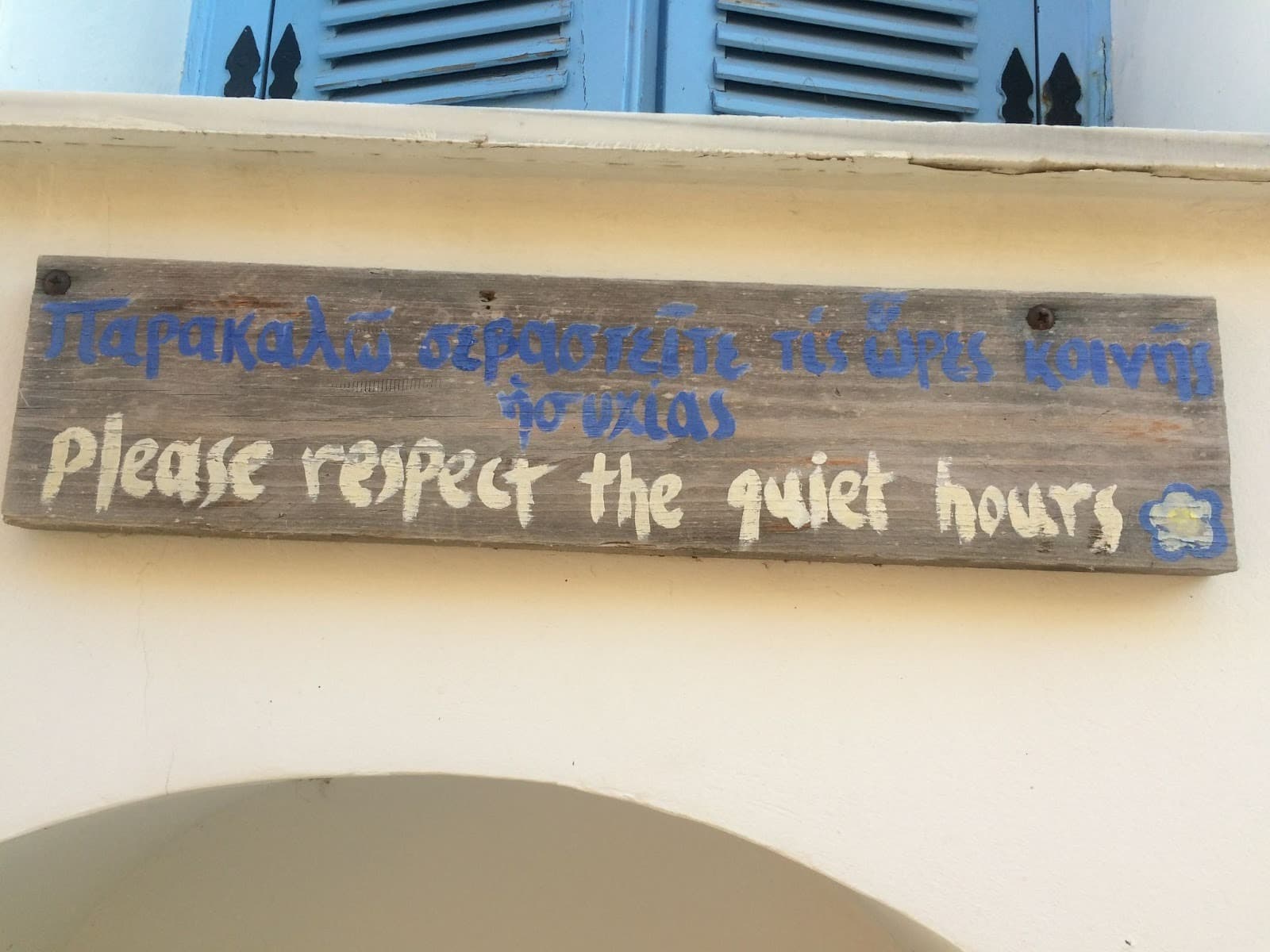
In many places, this pause is formally protected. There are designated quiet hours, typically in the afternoon, when noise is not allowed. Work stops. Tools are put away. Even phone calls are avoided unless necessary.
There is no need to explain it. Life simply slows when it must.
Underlying this is something deeply Greek: an acceptance of human limits.
- tiredness is not weakness
- needing to pause is not failure
- rest is part of being human
When a culture recognizes this openly, it removes shame from rest and pressure from performance.
Diakopes: Stepping Away Entirely
But this idea of pause extends beyond a single moment in the day.
In Greece, stepping away from life entirely is also considered essential.
Vacation — diakopes (διακοπές), meaning to interrupt or break — is not treated as a luxury. It is understood as necessary. Life is not meant to be lived in a continuous line of effort. It needs interruption. It needs space to reset.
In the summer, especially in August, cities empty. Shops close. Phones go unanswered. People return to villages, islands, and family homes — not to do more, but to be.
Time stretches. Meals become longer. Sleep aligns with natural rhythms. Children move freely. Evenings unfold slowly.
Nothing is being optimized.
This is not escape. It is recalibration.
Why It Matters
The nervous system unwinds because nothing is being demanded of it. Life regains its texture — connection, simplicity, presence.
This belief in rest extends beyond habit into structure. Through social tourism programs, low-income workers, retirees, and families are helped to take vacation each year. The idea is simple: rest is not a luxury reserved for a few. It is part of a healthy life for everyone.
The effects of this way of living are not surprising. Regular pauses reduce stress, support digestion, improve sleep, and restore emotional balance. More than that, they preserve something essential — a sense of dignity, of being whole, of not being consumed by the demands of life.
In many modern cultures, rest is squeezed in, optimized, or treated as a reward for burnout. In Greece, it is preventative. It exists so burnout does not become normal.
The Greek Mediterranean lifestyle reminds us that living well is not only about what you eat or how you move, but about knowing when to stop.
Sometimes, the most important thing you can do is close the shutters, lower the noise, and step away.
And when the time comes, you return — lighter, clearer, and ready to begin again.
Want More Greek Wisdom?
Get weekly insights on Greek food, lifestyle, and travel delivered to your inbox.
No spam, ever. Unsubscribe anytime.