Cook Once, Eat Well All Week the Greek Way
A practical Greek kitchen rhythm built on legumes, ladera, olive oil, ready salads, and cooking once so real food carries you through the week.
March 27, 2026
Cook once, eat many times: that's the Greek way.
And in my kitchen, I always make more than I need, because why not cook once and eat many times, even if it's for another week?
A Kitchen Built on Rhythm
Greek cooking follows a rhythm, not a recipe.
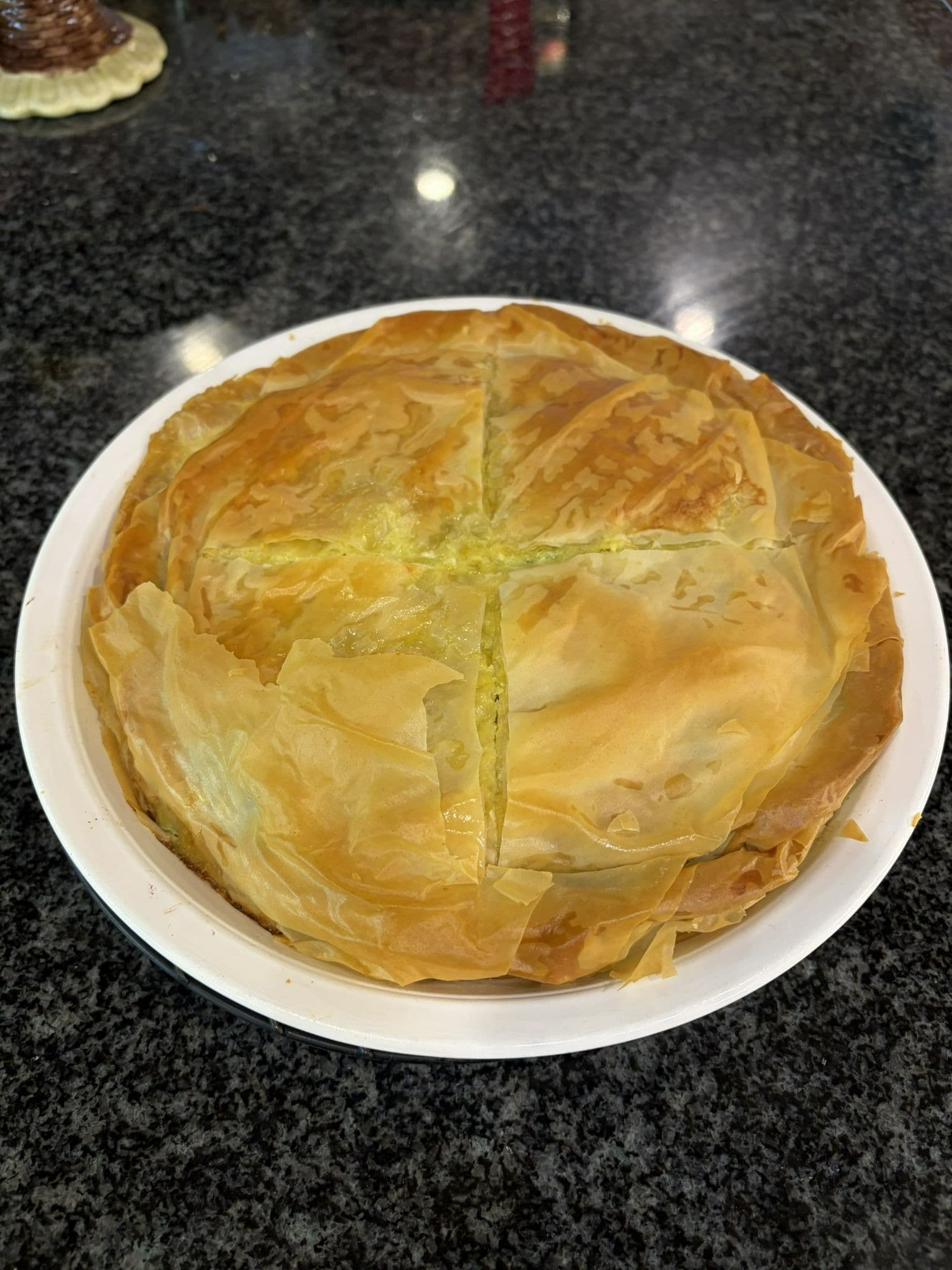
At the beginning of the week, a few simple dishes come together almost effortlessly: a pot of lentils, a pan of beans, vegetables simmered slowly in olive oil, maybe a phyllo pita baking in the oven. These aren't just meals for one day. They become the foundation of the week, transforming into soups, salads, dips, casseroles, and sides.
This rhythm, one day of cooking, a week of eating, is how Greek households eat beautifully without stress. And it's how a high-polyphenol way of eating happens naturally, without counting or planning.
Cooking Once, Eating Now and Later
Not everything you cook is meant for this week.
In my kitchen, I always make extra, not to eat the same dish again tomorrow, but to have something ready for another time. The portion for the week stays in the refrigerator. The rest goes into the freezer.
That way, you're not repeating meals. You're building a kitchen that always has something nourishing ready.
The Freezer as a Second Pantry
In my Greek kitchen, the pantry doesn't end at the cupboard. It extends into the freezer.
A well-stocked freezer makes this way of eating easy, flexible, and sustainable. It's not about storing leftovers. It's about building a reserve of real food that can be used and reused throughout the week.
Cooked legumes are portioned and saved. Tomato sauces, rich with olive oil and herbs, are ready to be reheated. Roasted vegetables can become tomorrow's meal with almost no effort. Even phyllo pitas and vegetable dishes freeze beautifully and come back to life with gentle reheating, a fresh drizzle of olive oil, and a squeeze of lemon.
This is not emergency food. It's everyday food, just prepared ahead.
The Greek Protein Perspective
One of the biggest misconceptions about healthy eating is the need for constant meat.
In Greece, especially traditionally, meat is eaten occasionally, never daily. And even when it is included, it usually plays a smaller role within the dish, with vegetables taking the lead. Most protein comes from legumes, yogurt, cheese, eggs, nuts, and fish. These foods work together with vegetables and olive oil to create meals that are balanced, satisfying, and deeply nourishing.
There is always full-fat Greek yogurt in the refrigerator, for a quick meal with fruit and nuts, or to turn into a savory dip. It's one of the simplest and most versatile foods in the kitchen.
Your One-Day Prep Rhythm
A few hours of relaxed cooking at the beginning of the week can change everything.
Start with a pot of lentils or beans. While they cook, saute onions and garlic in olive oil, a base that can be used throughout the week. Roast a tray of vegetables. Simmer a simple tomato sauce with herbs. If you have time, prepare Greek rice or pasta in sauce, phyllo pita, or casserole, one to eat now and one to freeze.
None of this is complicated. It's a rhythm, and once it becomes familiar, it feels almost effortless.
The Weekly Rhythm (What I Actually Cook)
In my kitchen, there is always a loose rhythm to the week.
In winter, I usually prepare two legume mains and two ladera dishes, sometimes three if something looks especially good at the market. These become the foundation of most meals throughout the week, often eaten daily as a main dish, a side, or part of a soup.
In summer, it shifts slightly: one legume main, with others often used in salads like black-eyed peas or fava, along with two or three vegetable dishes depending on what's in season.
Fish is usually prepared twice a week. I make enough for two meals, and if I have fillets in the freezer, along with onions and a few fresh ingredients I always keep on hand, what I think of as a secondary pantry, it's easy to pull together a simple, fresh meal at any time.
Chicken and red meat are eaten occasionally, usually about once a week in total, often less. In practice, that might mean chicken once or twice a month and red meat once or twice a month. There may also be one or two meals out during the month, but at home, the focus remains on vegetables, legumes, and olive oil.
This isn't rigid planning. It's a pattern, one that adjusts naturally with the seasons and what looks good that week.
How Meals Evolve
This is where the Greek kitchen becomes truly practical.
A pot of lentils one day becomes a soup the next, then lentils with rice, and finally what remains can be pureed into a dip. The same is true for beans and other legumes. They continue to transform throughout the week.
Roasted vegetables might begin as a side dish, then become part of a pasta, a pizza, a phyllo pita, an omelet, or whatever inspires you in the moment.
Tomato sauce becomes the base for beans, fish, eggs, and countless other meals.
Nothing is wasted. Everything evolves.
The Role of Salads
Equally important, and often overlooked, is having components ready for quick salads.
Each week, I prepare two or three simple options to have on hand.
Cabbage is often already shredded, ready to be dressed with olive oil and lemon, which I always keep squeezed in the refrigerator. Broccoli, Brussels sprouts, asparagus, or other vegetables can be roasted or lightly steamed and used throughout the week.
In winter, mushrooms are sauteed and kept ready, eaten as a salad, added to eggs, stirred into pasta, or turned into risotto.
There are always leafy greens as well, either boiled as horta or ready for quick salads. Sometimes a simple spring mix with nuts or fruit, sometimes romaine with green onions, or greens added to beans or tuna for a complete meal.
These aren't complicated dishes. They are components, ready to become meals in minutes.
If you're building this way of eating, salates help explain how these everyday vegetables fit naturally into the week.
When the Week Winds Down
At the end of the week, whatever remains, a handful of greens, a few vegetables, bits of cooked dishes, comes together easily.
An omelet. A simple fried rice. A quick saute.
These are often some of the most satisfying meals, because everything is already there.
When your kitchen is stocked this way, meals don't require effort. They come together naturally.
Where to Go Next
If you're building this way of cooking into your kitchen, these will help you go deeper:
- Ladera, vegetables cooked in olive oil
- Greek rice and pasta in sauce
- The Greek Mediterranean Kitchen
- Salates
Closing
The high-polyphenol kitchen runs on rhythm, not rush.
A few hours of cooking creates a week of nourishment. Meals become easier. Food becomes better. And the question of "what should I eat?" quietly disappears.
You don't need to measure or calculate.
Just cook like a Greek: with olive oil, herbs, and intention.
One pot, one pour, one shared table, again and again.
Want More Greek Wisdom?
Get weekly insights on Greek food, lifestyle, and travel delivered to your inbox.
No spam, ever. Unsubscribe anytime.